
Loading reader
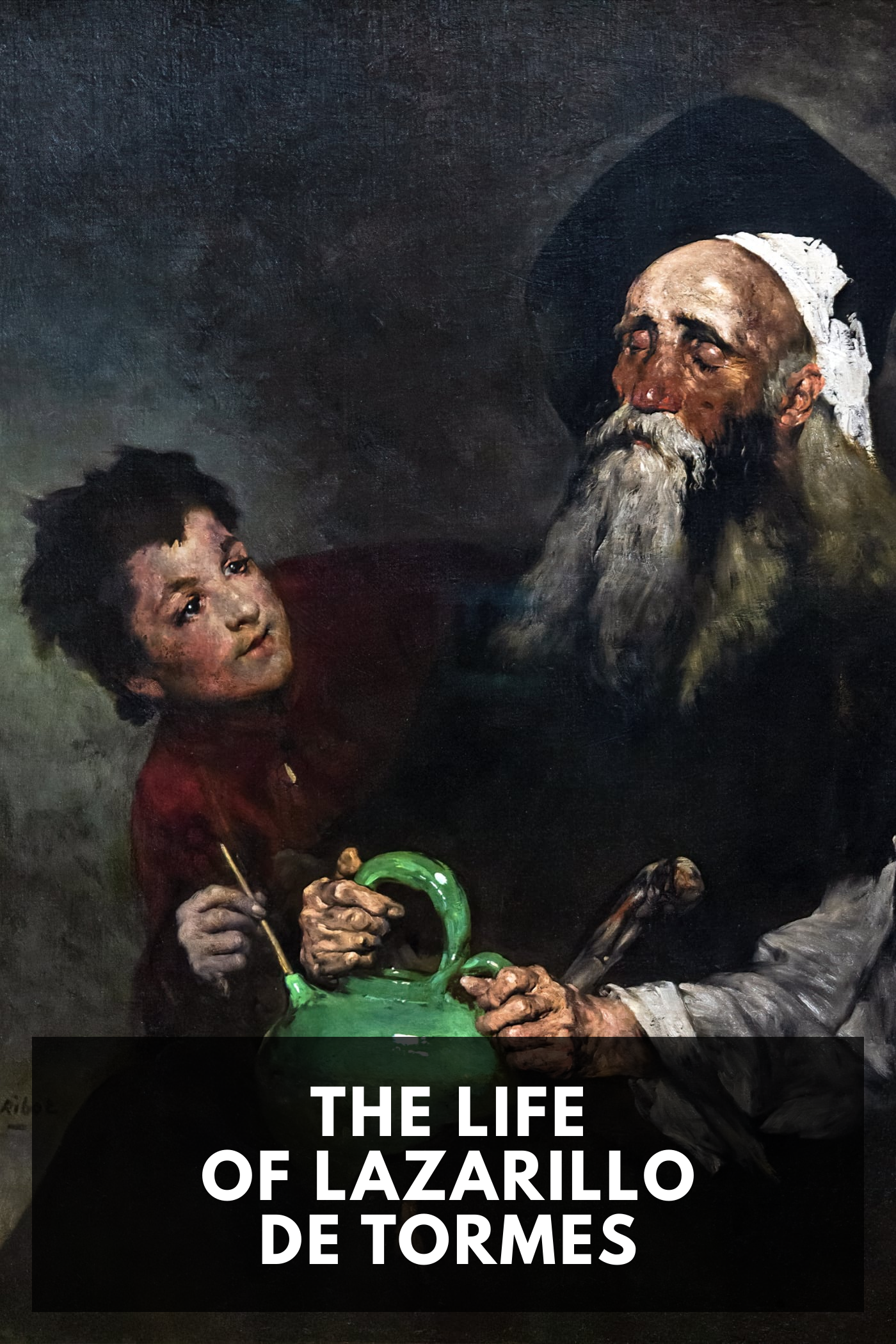
Well! your Honour must know, before anything else, that they call me Lazarillo de Tormes, and that I am the son of Thomé Gonçales and Antonia Perez, natives of Tejares, a village near Salamanca. My birth was in the river Tormes, for which reason I have the river for a surname, and it was in this manner.
My father, whom God pardon, had charge of a flour mill which was on the banks of that river. He was the miller there for over fifteen years, and my mother, being one night taken with me in the mill, she gave birth to me there. So that I may say with truth that I was born in the river.
When I was a child of eight years old, they accused my father of certain misdeeds done to the sacks of those who came to have their corn ground. He was taken into custody, and confessed and denied not, suffering persecution for justice’s sake. So I trust in God that he is in glory, for the Evangelist tells us that such are blessed. At that time there was a certain expedition against the Moors and among the adventurers was my father, who was banished for the affair already mentioned. He went in the position of attendant on a knight who also went, and, with his master, like a loyal servant, he ended his life.
My widowed mother, finding herself without husband or home, determined to betake herself to the good things so as to be among them; so she went to live in the city. She hired a small house, and was employed to prepare victuals for certain students. She also washed the clothes of the stable-boys who had charge of the horses of the Comendador de la Magdalena. Thus she frequented the stables, she and a dark-coloured man, who was one of those who had the care of the horses. They came to know each other. Sometimes he came to our house late, and went away in the morning. At other times he came to the door in the daytime, with the excuse that he wanted to buy eggs, and walked into the house. At first I did not like him, for I was afraid of his colour and his ugly face. But when I saw that his coming was the sign of better living, I began to like him, for he always brought pieces of meat, bread, and in the winter, fuel to warm us.
This intercourse went on until one day my mother gave me a pretty little brown brother, whom I played with and helped to keep warm. I remember once that when my stepfather was fondling the child, it noticed that my mother and I were white, and that he was not. It frightened the child, who ran to my mother, pointing with its finger and saying, “Mother, he is ugly!” To this he replied laughing; but I noticed the words of my little brother, and, though so young, I said to myself, “How many there are in the world who run from others because they do not see themselves in them.”
It was our fate that the intimacy of the Zayde, for so they called my stepfather, came to the ears of the steward. On looking into the matter he found that half the corn he gave out for the horses was stolen, also that the fuel, aprons, pillions, horse-cloths, and blankets were missing, and that when nothing else was left, the horseshoes were taken. With all this my mother was helped to bring up the child. We need not wonder at a priest or a friar, when one robs the poor, and the other his female devotees to help a friend such as himself, when the love of a poor stable-lad brings him to this.
All I have related was proved, because they cross-questioned me with threats, and being a child I answered and let out all I knew from fear, down to certain horseshoes which, by my mother’s order, I sold to a blacksmith. They flogged my unhappy stepfather, and put my mother on the accustomed penance as a punishment. An order was given that she was not to enter the stables of the Comendador, nor to receive the flogged Zayde in her house.
The poor woman complied with the sentence that she might not lose all; and to avoid danger and silence evil tongues she went away into service. She was employed in the open gallery of an inn, and so she contrived to rear the little brother, though suffering from many difficulties. She raised him until he could walk, and me until I was a fine little boy, who went for wine and lights for the guests, and for anything else they wanted.
Tejares is a small village on the left bank of the river Tormes, about two miles from Salamanca. It consists of a church dedicated to San Pedro, and about fifty houses on the skirts of a hill. ↩
The river Tormes rises in the Sierra de Gredos, a range of hills dividing Estremadura from Old Castille, on the confines of the province of Avila. Its chief sources are a large sheet of water called the “Laguna de Gredos,” and a perennial stream called “Tornella.” Receiving several streams from the Gredos hills, the Tormes flows north, passing by Alba de Tormes, where there is a stone bridge; and then turns northwest, passing Salamanca, where there is another fine stone bridge, and Ledesma. Finally, it falls into the Douro, on the Portuguese frontier. The Tormes turns many flour mills. ↩
This expedition against the Moors started from Malaga under the command of Don Garcia de Toledo in 1510, when Lazarillo was seven years old. The fleet first touched at Sicily and then made for the island of Los Gelves, off the African coast, between Tunis and Tripoli, now called Zerbi. With Toledo were Diego de Vera and Count Pedro Navarro. Zerbi was a low sandy island covered with palm-trees, ruled by a Sheikh of its own. The army landed on the 8th of August 1510. But the Spaniards fell into an ambuscade and were defeated, Toledo being among the slain. Four thousand were killed or taken prisoners. The rest escaped to the ships and returned to Sicily. Toledo was a grandson of the first Duke of Alva. ↩
Comendadores were knights of the Orders of Santiago, Calatrava, and Alcantara. Each had a title affixed to their knighthood. The Comendador of La Magdalena was a knight of the Order of Alcantara. ↩
