
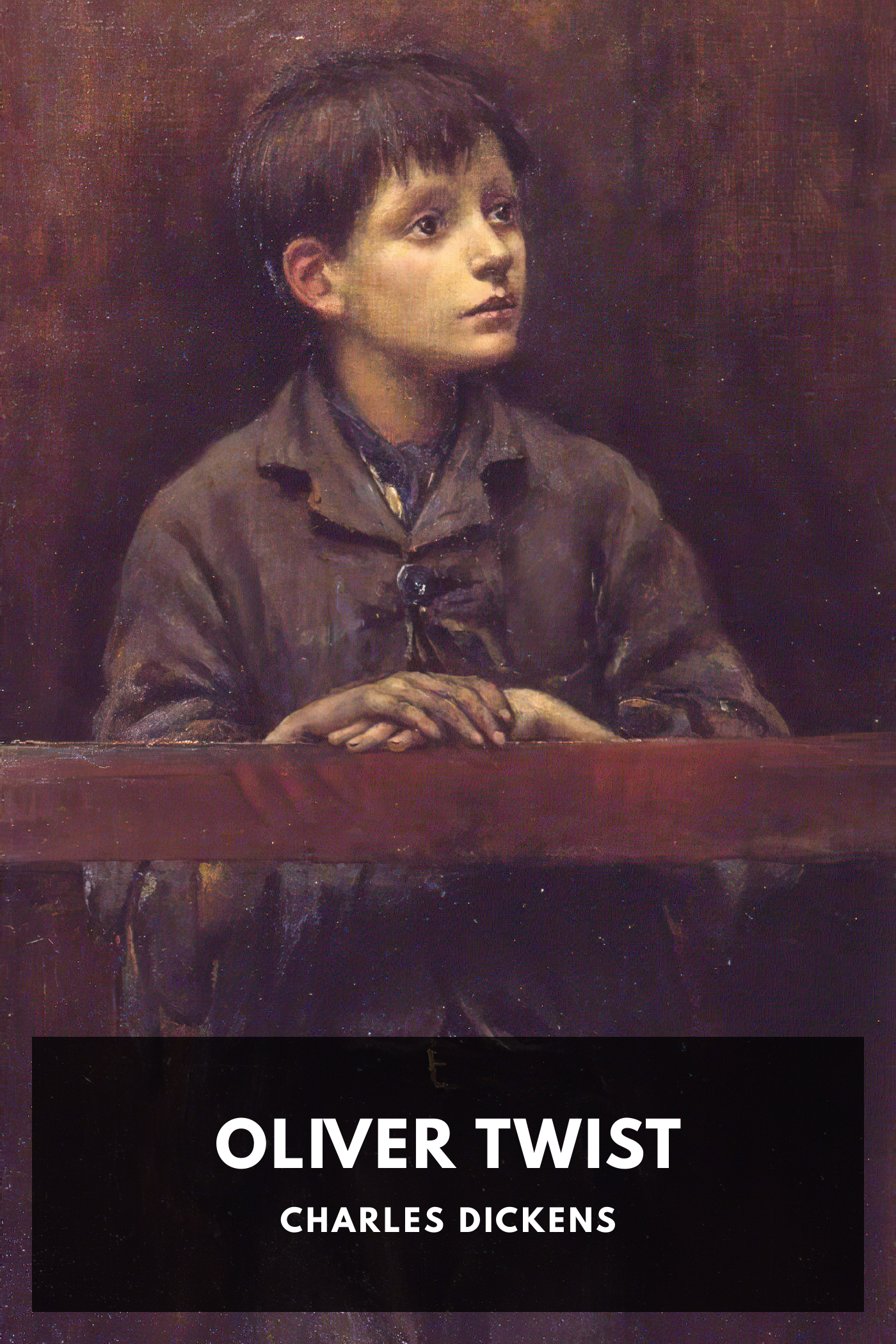
Oliver Twist, or The Parish Boy’s Progress was Charles Dickens’ second novel, following The Pickwick Papers , and was published as a serial in the magazine Bentley’s Miscellany between 1837 and 1839. It details the misadventures of its eponymous character, Oliver Twist, born in a Victorian-era workhouse, his mother dying within minutes of his birth. He is raised in miserable conditions, half-starved, and then sent out as an apprentice to an undertaker. Running away from this situation, he walks to London and falls under the influence of a criminal gang run by an old man called Fagin, who wants to employ the child as a pickpocket. The novel graphically depicts the wretched living conditions of much of the poor people of Victorian times and the disgusting slums in which they were forced to live. It has been accused of perpetrating anti-Semitic stereotypes in the character of Fagin, almost always referred to as “the Jew” in the book’s early chapters. Interestingly, while the serial was still running in the magazine, Dickens was eventually persuaded that he was wrong in this and removed many such usages in later episodes. He also introduced more kindly Jewish characters in such later novels as Our Mutual Friend . Oliver Twist was immediately popular in serial form, with its often gripping story and lurid details. It has remained one of Dickens’ best-loved novels, and the story has often been made into films and television series, as well as into a very popular musical, Oliver! .