
Loading reader
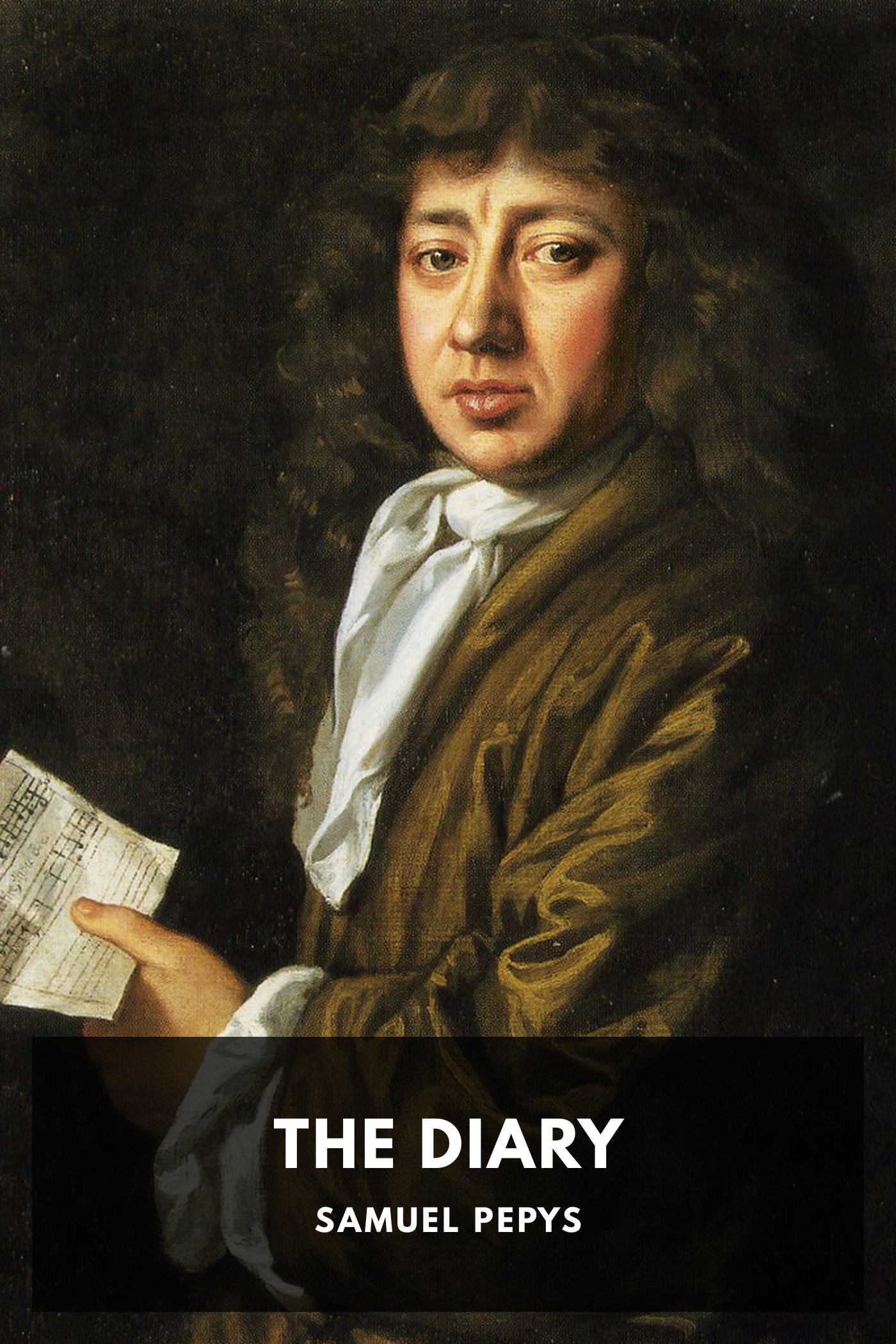
Blessed be God, at the end of the last year I was in very good health, without any sense of my old pain, but upon taking of cold. I lived in Axe Yard, having my wife, and servant Jane, and no more in family than us three. My wife … gave me hopes of her being with child, but on the last day of the year … [the hope was belied.]
The condition of the State was thus; viz. the Rump, after being disturbed by my Lord Lambert, was lately returned to sit again. The officers of the Army all forced to yield. Lawson lies still in the river, and Monk is with his army in Scotland. Only my Lord Lambert is not yet come into the Parliament, nor is it expected that he will without being forced to it. The new Common Council of the City do speak very high; and had sent to Monk their sword-bearer, to acquaint him with their desires for a free and full Parliament, which is at present the desires, and the hopes, and expectation of all. Twenty-two of the old secluded members having been at the House-door the last week to demand entrance, but it was denied them; and it is believed that [neither] they nor the people will be satisfied till the House be filled. My own private condition very handsome, and esteemed rich, but indeed very poor; besides my goods of my house, and my office, which at present is somewhat uncertain. Mr. Downing master of my office.
Jan. 1st (Lord’s day). This morning (we living lately in the garret) I rose, put on my suit with great skirts, having not lately worn any other clothes but them. Went to Mr. Gunning’s chapel at Exeter House, where he made a very good sermon upon these words:—“That in the fullness of time God sent his Son, made of a woman,” etc.; showing, that, by “made under the law,” is meant his circumcision, which is solemnized this day. Dined at home in the garret, where my wife dressed the remains of a turkey, and in the doing of it she burned her hand. I stayed at home all the afternoon, looking over my accounts; then went with my wife to my father’s, and in going observed the great posts which the City have set up at the Conduit in Fleet-street. Supped at my father’s, where in came Mrs. The. Turner and Madam Morrice, and supped with us. After that my wife and I went home with them, and so to our own home.
2nd. In the morning before I went forth old East brought me a dozen of bottles of sack, and I gave him a shilling for his pains. Then I went to Mr. Sheply who was drawing of sack in the wine cellar to send to other places as a gift from my Lord, and told me that my Lord had given him order to give me the dozen of bottles. Thence I went to the Temple to speak with Mr. Calthropp about the £60 due to my Lord, but missed of him, he being abroad. Then I went to Mr. Crew’s and borrowed £10 of Mr. Andrewes for my own use, and so went to my office, where there was nothing to do. Then I walked a great while in Westminster Hall, where I heard that Lambert was coming up to London; that my Lord Fairfax was in the head of the Irish brigade, but it was not certain what he would declare for. The House was today upon finishing the act for the Council of State, which they did; and for the indemnity to the soldiers; and were to sit again thereupon in the afternoon. Great talk that many places have declared for a free Parliament; and it is believed that they will be forced to fill up the House with the old members. From the Hall I called at home, and so went to Mr. Crew’s (my wife she was to go to her father’s), thinking to have dined, but I came too late, so Mr. Moore and I and another gentleman went out and drank a cup of ale together in the new market, and there I eat some bread and cheese for my dinner. After that Mr. Moore and I went as far as Fleet-street together and parted, he going into the City, I to find Mr. Calthrop, but failed again of finding him, so returned to Mr. Crew’s again, and from thence went along with Mrs. Jemimah home, and there she taught me how to play at cribbage. Then I went home, and finding my wife gone to see Mrs. Hunt, I went to Will’s, and there sat with Mr. Ashwell talking and singing till nine o’clock, and so home, there, having not eaten anything but bread and cheese, my wife cut me a slice of brawn which I received from my Lady, which proves as good as ever I had any. So to bed, and my wife had a very bad night of it through wind and cold.
3rd. I went out in the morning, it being a great frost, and walked to Mrs. Turner’s to stop her from coming to see me today, because of Mrs. Jem’s coming, thence I went to the Temple to speak with Mr. Calthrop, and walked in his chamber an hour, but could not see him, so went to Westminster, where I found soldiers in my office to receive money, and paid it them. At noon went home, where Mrs. Jem, her maid, Mr. Sheply, Hawly, and Moore dined with me on a piece of beef and cabbage, and a collar of brawn. We then fell to cards till dark, and then I went home with Mrs. Jem, and meeting Mr. Hawly got him to bear me company to Chancery Lane, where I spoke with Mr. Calthrop, he told me that Sir James Calthrop was lately dead, but that he would write to his Lady, that the money may be speedily paid. Thence back to Whitehall, where I understood that the Parliament had passed the act for indemnity to the soldiers and officers that would come in, in so many days, and that my Lord Lambert should have benefit of the said act. They had also voted that all vacancies in the House, by the death of any of the old members, shall be filled up; but those that are living shall not be called in. Thence I went home, and there found Mr. Hunt and his wife, and Mr. Hawly, who sat with me till ten at night at cards, and so broke up and to bed.
4th. Early came Mr. Vanly to me for his half-year’s rent, which I had not in the house, but took his man to the office and there paid him. Then I went down into the Hall and to Will’s, where Hawly brought a piece of his Cheshire cheese, and we were merry with it. Then into the Hall again, where I met with the Clerk and Quarter Master of my Lord’s troop, and took them to the Swan and gave them their morning’s draught, they being just come to town. Mr. Jenkins showed me two bills of exchange for money to receive upon my Lord’s and my pay. It snowed hard all this morning, and was very cold, and my nose was much swelled with cold. Strange the difference of men’s talk! Some say that Lambert must of necessity yield up; others, that he is very strong, and that the Fifth-monarchy-men [will] stick to him, if he declares for a free Parliament. Chillington was sent yesterday to him with the vote of pardon and indemnity from the Parliament. From the Hall I came home, where I found letters from Hinchinbroke and news of Mr. Sheply’s going thither the next week. I dined at home, and from thence went to Will’s to Shaw, who promised me to go along with me to Atkinson’s about some money, but I found him at cards with Spicer and D. Vines, and could not get him along with me. I was vexed at this, and went and walked in the Hall, where I heard that the Parliament spent this day in fasting and prayer; and in the afternoon came letters from the North, that brought certain news that my Lord Lambert his forces were all forsaking him, and that he was left with only fifty horse, and that he did now declare for the Parliament himself; and that my Lord Fairfax did also rest satisfied, and had laid down his arms, and that what he had done was only to secure the country against my Lord Lambert his raising of money, and free quarter. I went to Will’s again, where I found them still at cards, and Spicer had won 14s. of Shaw and Vines. Then I spent a little time with G. Vines and Maylard at Vines’s at our viols. So home, and from thence to Mr. Hunt’s, and sat with them and Mr. Hawly at cards till ten at night, and was much made of by them. Home and so to bed, but much troubled with my nose, which was much swelled.
5th. I went to my office, where the money was again expected from the Excise office, but none brought, but was promised to be sent this afternoon. I dined with Mr. Sheply, at my Lord’s lodgings, upon his turkey-pie. And so to my office again; where the Excise money was brought, and some of it told to soldiers till it was dark. Then I went home, and after writing a letter to my Lord and told him the news that the Parliament hath this night voted that the members that were discharged from sitting in the years 1648 and 49, were duly discharged; and that there should be writs issued presently for the calling of others in their places, and that Monk and Fairfax were commanded up to town, and that the Prince’s lodgings were to be provided for Monk at Whitehall. Then my wife and I, it being a great frost, went to Mrs. Jem’s, in expectation to eat a sack-posset, but Mr. Edward not coming it was put off; and so I left my wife playing at cards with her, and went myself with my lantern to Mr. Fage, to consult concerning my nose, who told me it was nothing but cold, and after that we did discourse concerning public business; and he told me it is true the City had not time enough to do much, but they are resolved to shake off the soldiers; and that unless there be a free Parliament chosen, he did believe there are half the Common Council will not levy any money by order of this Parliament. From thence I went to my father’s, where I found Mrs. Ramsey and her grandchild, a pretty girl, and stayed a while and talked with them and my mother, and then took my leave, only heard of an invitation to go to dinner tomorrow to my cousin Thomas Pepys. I went back to Mrs. Jem, and took my wife and Mrs. Sheply, and went home.
6th. This morning Mr. Sheply and I did eat our breakfast at Mrs. Harper’s, (my brother John being with me) upon a cold turkey-pie and a goose. From thence I went to my office, where we paid money to the soldiers till one o’clock, at which time we made an end, and I went home and took my wife and went to my cousin, Thomas Pepys, and found them just sat down to dinner, which was very good; only the venison pasty was palpable beef, which was not handsome. After dinner I took my leave, leaving my wife with my cousin Stradwick and went to Westminster to Mr. Vines, where George and I fiddled a good while, Dick and his wife (who was lately brought to bed) and her sister being there, but Mr. Hudson not coming according to his promise, I went away, and calling at my house on the wench, I took her and the lantern with me to my cousin Stradwick, where, after a good supper, there being there my father, mother, brothers, and sister, my cousin Scott and his wife, Mr. Drawwater and his wife, and her brother, Mr. Stradwick, we had a brave cake brought us, and in the choosing, Pall was Queen and Mr. Stradwick was King. After that my wife and I bid adieu and came home, it being still a great frost.
7th. At my office as I was receiving money of the probate of wills, in came Mrs. Turner, Theoph., Madame Morrice, and Joyce, and after I had done I took them home to my house and Mr. Hawly came after, and I got a dish of steaks and a rabbit for them, while they were playing a game or two at cards. In the middle of our dinner a messenger from Mr. Downing came to fetch me to him, so leaving Mr. Hawly there, I went and was forced to stay till night in expectation of the French Embassador, who at last came, and I had a great deal of good discourse with one of his gentlemen concerning the reason of the difference between the zeal of the French and the Spaniard. After he was gone I went home, and found my friends still at cards, and after that I went along with them to Dr. Whores (sending my wife to Mrs. Jem’s to a sack-posset), where I heard some symphony and songs of his own making, performed by Mr. May, Harding, and Mallard. Afterwards I put my friends into a coach, and went to Mrs. Jem’s, where I wrote a letter to my Lord by the post, and had my part of the posset which was saved for me, and so we went home, and put in at my Lord’s lodgings, where we stayed late, eating of part of his turkey-pie, and reading of Quarles’ Emblems. So home and to bed.
8th (Sunday). In the morning I went to Mr. Gunning’s, where a good sermon, wherein he showed the life of Christ, and told us good authority for us to believe that Christ did follow his father’s trade, and was a carpenter till thirty years of age. From thence to my father’s to dinner, where I found my wife, who was forced to dine there, we not having one coal of fire in the house, and it being very hard frosty weather. In the afternoon my father, he going to a man’s to demand some money due to my Aunt Bell, my wife and I went to Mr. Mossum’s, where a strange doctor made a very good sermon. From thence sending my wife to my father’s, I went to Mrs. Turner’s, and stayed a little while, and then to my father’s, where I found Mr. Sheply, and after supper went home together. Here I heard of the death of Mr. Palmer, and that he was to be buried at Westminster tomorrow.
9th. For these two or three days I have been much troubled with thoughts how to get money to pay them that I have borrowed money of, by reason of my money being in my uncle’s hands. I rose early this morning, and looked over and corrected my brother John’s speech, which he is to make the next apposition and after that I went towards my office, and in my way met with W. Simons, Muddiman, and Jack Price, and went with them to Harper’s and in many sorts of talk I stayed till two of the clock in the afternoon. I found Muddiman a good scholar, an arch rogue; and owns that though he writes new books for the Parliament, yet he did declare that he did it only to get money; and did talk very basely of many of them. Among other things, W. Simons told me how his uncle Scobell was on Saturday last called to the bar, for entering in the journal of the House, for the year 1653, these words: “This day his Excellence the Lord General Cromwell dissolved this House;” which words the Parliament voted a forgery, and demanded of him how they came to be entered. He answered that they were his own handwriting, and that he did it by virtue of his office, and the practice of his predecessor; and that the intent of the practice was to let posterity know how such and such a Parliament was dissolved, whether by the command of the King, or by their own neglect, as the last House of Lords was; and that to this end, he had said and writ that it was dissolved by his Excellence the Lord G[eneral]; and that for the word dissolved, he never at the time did hear of any other term; and desired pardon if he would not dare to make a word himself when it was six years after, before they came themselves to call it an interruption; but they were so little satisfied with this answer, that they did choose a committee to report to the House, whether this crime of Mr. Scobell’s did come within the act of indemnity or no. Thence I went with Muddiman to the Coffee-House, and gave 18d. to be entered of the Club. Thence into the Hall, where I heard for certain that Monk was coming to London, and that Bradshaw’s lodgings were preparing for him. Thence to Mrs. Jem’s, and found her in bed, and she was afraid that it would prove the smallpox. Thence back to Westminster Hall, where I heard how Sir H. Vane was this day voted out of the House, and to sit no more there; and that he would retire himself to his house at Raby, as also all the rest of the nine officers that had their commissions formerly taken away from them, were commanded to their farthest houses from London during the pleasure of the Parliament. Here I met with the Quarter Master of my Lord’s troop, and his clerk Mr. Jenings, and took them home, and gave them a bottle of wine, and the remainder of my collar of brawn; and so good night. After that came in Mr. Hawly, who told me that I was missed this day at my office, and that tomorrow I must pay all the money that I have, at which I was put to a great loss how I should get money to make up my cash, and so went to bed in great trouble.
10th. Went out early, and in my way met with Greatorex and at an alehouse he showed me the first sphere of wire that ever he made, and indeed it was very pleasant; thence to Mr. Crew’s, and borrowed £10, and so to my office, and was able to pay my money. Thence into the Hall, and meeting the Quarter Master, Jenings, and Captain Rider, we four went to a cook’s to dinner. Thence Jenings and I into London (it being through heat of the sun a great thaw and dirty) to show our bills of return, and coming back drank a pint of wine at the Star in Cheapside. So to Westminster, overtaking Captain Okeshott in his silk cloak, whose sword got hold of many people in walking. Thence to the Coffeehouse, where were a great confluence of gentlemen; viz. Mr. Harrington, Poultny, chairman, Gold, Dr. Petty, etc., where admirable discourse till at night. Thence with Doling to Mother Lams, who told me how this day Scott was made Intelligencer, and that the rest of the members that were objected against last night, their business was to be heard this day sennight. Thence I went home and wrote a letter, and went to Harper’s, and stayed there till Tom carried it to the postboy at Whitehall. So home to bed.
11th. Being at Will’s with Captain Barker, who hath paid me £300 this morning at my office, in comes my father, and with him I walked, and leave him at W. Joyce’s, and went myself to Mr. Crew’s, but came too late to dine, and therefore after a game at shuttle-cocks with Mr. Walgrave and Mr. Edward, I returned to my father, and taking him from W. Joyce’s, who was not abroad himself, we inquired of a porter, and by his direction went to an alehouse, where after a cup or two we parted. I went towards London, and in my way went in to see Crowly, who was now grown a very great loon and very tame. Thence to Mr. Steven’s with a pair of silver snuffers, and bought a pair of shears to cut silver, and so homeward again. From home I went to see Mrs. Jem, who was in bed, and now granted to have the smallpox. Back again, and went to the Coffeehouse, but tarried not, and so home.
12th. I drink my morning at Harper’s with Mr. Sheply and a seaman, and so to my office, where Captain Holland came to see me, and appointed a meeting in the afternoon. Then wrote letters to Hinchinbroke and sealed them at Will’s, and after that went home, and thence to the Half Moon, where I found the Captain and Mr. Billingsly and Newman, a barber, where we were very merry, and had the young man that plays so well on the Welsh harp. Billingsly paid for all. Thence home, and finding my letters this day not gone by the carrier I new sealed them, but my brother Tom coming we fell into discourse about my intention to feast the Joyces. I sent for a bit of meat for him from the cook’s, and forgot to send my letters this night. So I went to bed, and in discourse broke to my wife what my thoughts were concerning my design of getting money by, etc.
13th. Coming in the morning to my office, I met with Mr. Fage and took him to the Swan. He told me how high Haselrigge, and Morley, the last night began at my Lord Mayor’s to exclaim against the City of London, saying that they had forfeited their charter. And how the Chamberlain of the City did take them down, letting them know how much they were formerly beholding to the City, etc. He also told me that Monk’s letter that came to them by the sword-bearer was a cunning piece, and that which they did not much trust to; but they were resolved to make no more applications to the Parliament, nor to pay any money, unless the secluded members be brought in, or a free Parliament chosen. Thence to my office, where nothing to do. So to Will’s with Mr. Pinkney, who invited me to their feast at his Hall the next Monday. Thence I went home and took my wife and dined at Mr. Wades, and after that we went and visited Catan. From thence home again, and my wife was very unwilling to let me go forth, but with some discontent would go out if I did, and I going forth towards Whitehall, I saw she followed me, and so I stayed and took her round through Whitehall, and so carried her home angry. Thence I went to Mrs. Jem, and found her up and merry, and that it did not prove the smallpox, but only the swine-pox; so I played a game or two at cards with her. And so to Mr. Vines, where he and I and Mr. Hudson played half-a-dozen things, there being there Dick’s wife and her sister. After that I went home and found my wife gone abroad to Mr. Hunt’s, and came in a little after me. So to bed.
14th. Nothing to do at our office. Thence into the Hall, and just as I was going to dinner from Westminster Hall with Mr. Moore (with whom I had been in the lobby to hear news, and had spoke with Sir Anthony Ashley Cooper about my Lord’s lodgings) to his house, I met with Captain Holland, who told me that he hath brought his wife to my house, so I posted home and got a dish of meat for them. They stayed with me all the afternoon, and went hence in the evening. Then I went with my wife, and left her at market, and went myself to the Coffeehouse, and heard exceeding good argument against Mr. Harrington’s assertion, that overbalance of propriety [i.e., property] was the foundation of government. Home, and wrote to Hinchinbroke, and sent that and my other letter that missed of going on Thursday last. So to bed.
15th. Having been exceedingly disturbed in the night with the barking of a dog of one of our neighbours that I could not sleep for an hour or two, I slept late, and then in the morning took physic, and so stayed within all day. At noon my brother John came to me, and I corrected as well as I could his Greek speech to say the Apposition, though I believe he himself was as well able to do it as myself. After that we went to read in the great Officiale about the blessing of bells in the Church of Rome. After that my wife and I in pleasant discourse till night, then I went to supper, and after that to make an end of this week’s notes in this book, and so to bed. It being a cold day and a great snow my physic did not work so well as it should have done.
16th. In the morning I went up to Mr. Crew’s, and at his bedside he gave me direction to go tomorrow with Mr. Edward to Twickenham, and likewise did talk to me concerning things of state; and expressed his mind how just it was that the secluded members should come to sit again. I went from thence, and in my way went into an alehouse and drank my morning draught with Matthew Andrews and two or three more of his friends, coachmen. And of one of them I did hire a coach to carry us tomorrow to Twickenham. From thence to my office, where nothing to do; but Mr. Downing he came and found me all alone; and did mention to me his going back into Holland, and did ask me whether I would go or no, but gave me little encouragement, but bid me consider of it; and asked me whether I did not think that Mr. Hawly could perform the work of my office alone or no. I confess I was at a great loss, all the day after, to bethink myself how to carry this business. At noon, Harry Ethall came to me and went along with Mr. Maylard by coach as far as Salsbury Court, and there we set him down, and we went to the Clerks, where we came a little too late, but in a closet we had a very good dinner by Mr. Pinkny’s courtesy, and after dinner we had pretty good singing, and one, Hazard, sung alone after the old fashion, which was very much cried up, but I did not like it. Thence we went to the Green Dragon, on Lambeth Hill, both the Mr. Pinkney’s, Smith, Harrison, Morrice, that sang the bass, Sheply and I, and there we sang of all sorts of things, and I ventured with good success upon things at first sight, and after that I played on my flageolet, and stayed there till nine o’clock, very merry and drawn on with one song after another till it came to be so late. After that Sheply, Harrison and myself, we went towards Westminster on foot, and at the Golden Lion, near Charing Cross, we went in and drank a pint of wine, and so parted, and thence home, where I found my wife and maid a-washing. I stayed up till the bellman came by with his bell just under my window as I was writing of this very line, and cried, “Past one of the clock, and a cold, frosty, windy morning.” I then went to bed, and left my wife and the maid a-washing still.
17th. Early I went to Mr. Crew’s, and having given Mr. Edward money to give the servants, I took him into the coach that waited for us and carried him to my house, where the coach waited for me while I and the child went to Westminster Hall, and bought him some pictures. In the Hall I met Mr. Woodfine, and took him to Will’s and drank with him. Thence the child and I to the coach, where my wife was ready, and so we went towards Twickenham. In our way, at Kensington we understood how that my Lord Chesterfield had killed another gentleman about half an hour before, and was fled. We went forward and came about one of the clock to Mr. Fuller’s, but he was out of town, so we had a dinner there, and I gave the child 40s. to give to the two ushers. After that we parted and went homewards, it being market day at Brainford [Brentford]. I set my wife down and went with the coach to Mr. Crew’s, thinking to have spoke with Mr. Moore and Mrs. Jem, he having told me the reason of his melancholy was some unkindness from her after so great expressions of love, and how he had spoke to her friends and had their consent, and that he would desire me to take an occasion of speaking with her, but by no means not to heighten her discontent or distaste whatever it be, but to make it up if I can. But he being out of doors, I went away and went to see Mrs. Jem, who was now very well again, and after a game or two at cards, I left her. So I went to the Coffee Club, and heard very good discourse; it was in answer to Mr. Harrington’s answer, who said that the state of the Roman government was not a settled government, and so it was no wonder that the balance of propriety was in one hand, and the command in another, it being therefore always in a posture of war; but it was carried by ballot, that it was a steady government, though it is true by the voices it had been carried before that it was an unsteady government; so tomorrow it is to be proved by the opponents that the balance lay in one hand, and the government in another. Thence I went to Westminster, and met Shaw and Washington, who told me how this day Sydenham was voted out of the House for sitting any more this Parliament, and that Salloway was voted out likewise and sent to the Tower, during the pleasure of the House. Home and wrote by the Post, and carried to Whitehall, and coming back turned in at Harper’s, where Jack Price was, and I drank with him and he told me, among other things, how much the Protector is altered, though he would seem to bear out his trouble very well, yet he is scarce able to talk sense with a man; and how he will say that “Who should a man trust, if he may not trust to a brother and an uncle;” and “how much those men have to answer before God Almighty, for their playing the knave with him as they did.” He told me also, that there was £100,000 offered, and would have been taken for his restitution, had not the Parliament come in as they did again; and that he do believe that the Protector will live to give a testimony of his valour and revenge yet before he dies, and that the Protector will say so himself sometimes. Thence I went home, it being late and my wife in bed.
18th. To my office and from thence to Will’s, and there Mr. Sheply brought me letters from the carrier and so I went home. After that to Wilkinson’s, where we had a dinner for Mr. Talbot, Adams, Pinkny and his son, but his son did not come. Here we were very merry, and while I was here Mr. Fuller came thither and stayed a little while. After that we all went to my Lord’s, whither came afterwards Mr. Harrison, and by chance seeing Mr. Butler coming by I called him in and so we sat drinking a bottle of wine till night. At which time Mistress Ann came with the key of my Lord’s study for some things, and so we all broke up and after I had gone to my house and interpreted my Lord’s letter by his character I came to her again and went with her to her lodging and from thence to Mr. Crew’s, where I advised with him what to do about my Lord’s lodgings and what answer to give to Sir Ant. Cooper and so I came home and to bed. All the world is at a loss to think what Monk will do: the City saying that he will be for them, and the Parliament saying he will be for them.
19th. This morning I was sent for to Mr. Downing, and at his bed side he told me, that he had a kindness for me, and that he thought that he had done me one; and that was, that he had got me to be one of the Clerks of the Council; at which I was a little stumbled, and could not tell what to do, whether to thank him or no; but by and by I did; but not very heartily, for I feared that his doing of it was but only to ease himself of the salary which he gives me. After that Mr. Sheply staying below all this time for me we went thence and met Mr. Pierce, so at the Harp and Ball drank our morning draught and so to Whitehall where I met with Sir Ant. Cooper and did give him some answer from my Lord and he did give us leave to keep the lodgings still. And so we did determine thereupon that Mr. Sheply might now go into the country and would do so tomorrow. Back I went by Mr. Downing’s order and stayed there till twelve o’clock in expectation of one to come to read some writings, but he came not, so I stayed all alone reading the answer of the Dutch Ambassador to our State, in answer to the reasons of my Lord’s coming home, which he gave for his coming, and did labour herein to contradict my Lord’s arguments for his coming home. Thence to my office and so with Mr. Sheply and Moore, to dine upon a turkey with Mrs. Jem, and after that Mr. Moore and I went to the French Ordinary, where Mr. Downing this day feasted Sir Arth. Haselrigge, and a great many more of the Parliament, and did stay to put him in mind of me. Here he gave me a note to go and invite some other members to dinner tomorrow. So I went to Whitehall, and did stay at Marsh’s, with Simons, Luellin, and all the rest of the Clerks of the Council, who I hear are all turned out, only the two Leighs, and they do all tell me that my name was mentioned the last night, but that nothing was done in it. Hence I went and did leave some of my notes at the lodgings of the members and so home. To bed.
20th. In the morning I went to Mr. Downing’s bedside and gave him an account what I had done as to his guests, and I went thence to my Lord Widdrington who I met in the street, going to seal the patents for the judges today, and so could not come to dinner. I called upon Mr. Calthrop about the money due to my Lord. Here I met with Mr. Woodfine and drank with him at the Sun in Chancery Lane and so to Westminster Hall, where at the lobby I spoke with the rest of my guests and so to my office. At noon went by water with Mr. Maylard and Hales to the Swan in Fish Street at our Goal Feast, where we were very merry at our Jole of Ling, and from thence after a great and good dinner Mr. Falconberge would go drink a cup of ale at a place where I had like to have shot at a scholar that lay over the house of office. Thence calling on Mr. Stephens and Wootton (with whom I drank) about business of my Lord’s I went to the Coffee Club where there was nothing done but choosing of a Committee for orders. Thence to Westminster Hall where Mrs. Lane and the rest of the maids had their white scarfs, all having been at the burial of a young bookseller in the Hall. Thence to Mr. Sheply’s and took him to my house and drank with him in order to his going tomorrow. So parted and I sat up late making up my accounts before he go. This day three citizens of London went to meet Monk from the Common Council.
21st. Up early in finishing my accounts and writing to my Lord and from thence to my Lord’s and took leave of Mr. Sheply and possession of all the keys and the house. Thence to my office for some money to pay Mr. Sheply and sent it him by the old man. I then went to Mr. Downing who chid me because I did not give him notice of some of his guests failed him but I told him that I sent our porter to tell him and he was not within, but he told me that he was within till past twelve o’clock. So the porter or he lied. Thence to my office where nothing to do. Then with Mr. Hawly, he and I went to Mr. Crew’s and dined there. Thence into London, to Mr. Vernon’s and I received my £25 due by bill for my troopers’ pay. Then back again to Steadman’s. At the Mitre, in Fleet street, in our way calling on Mr. Fage, who told me how the City have some hopes of Monk. Thence to the Mitre, where I drank a pint of wine, the house being in fitting for Banister to come hither from Paget’s. Thence to Mrs. Jem and gave her £5. So home and left my money and to Whitehall where Luellin and I drank and talked together an hour at Marsh’s and so up to the clerks’ room, where poor Mr. Cook, a black man, that is like to be put out of his clerk’s place, came and railed at me for endeavouring to put him out and get myself in, when I was already in a good condition. But I satisfied him and after I had wrote a letter there to my Lord, wherein I gave him an account how this day Lenthall took his chair again, and [the House] resolved a declaration to be brought in on Monday next to satisfy the world what they intend to do. So home and to bed.
22nd. I went in the morning to Mr. Messum’s, where I met with W. Thurburn and sat with him in his pew. A very eloquent sermon about the duty of all to give good example in our lives and conversation, which I fear he himself was most guilty of not doing. After sermon, at the door by appointment my wife met me, and so to my father’s to dinner, where we had not been to my shame in a fortnight before. After dinner my father showed me a letter from Mr. Widdrington, of Christ’s College, in Cambridge, wherein he do express very great kindness for my brother, and my father intends that my brother shall go to him. To church in the afternoon to Mr. Herring, where a lazy poor sermon. And so home with Mrs. Turner and sitting with her a while we went to my father’s where we supped very merry, and so home. This day I began to put on buckles to my shoes, which I have bought yesterday of Mr. Wotton.
23rd. In the morning called out to carry £20 to Mr. Downing, which I did and came back, and finding Mr. Pierce, the surgeon, I took him to the Axe and gave him his morning draught. Thence to my office and there did nothing but make up my balance. Came home and found my wife dressing of the girl’s head, by which she was made to look very pretty. I went out and paid Wilkinson what I did owe him, and brought a piece of beef home for dinner. Thence I went out and paid Waters, the vintner, and went to see Mrs. Jem, where I found my Lady Wright, but Scott was so drunk that he could not be seen. Here I stayed and made up Mrs. Ann’s bills, and played a game or two at cards, and thence to Westminster Hall, it being very dark. I paid Mrs. Michell, my bookseller, and back to Whitehall, and in the garden, going through to the Stone Gallery I fell into a ditch, it being very dark. At the Clerk’s chamber I met with Simons and Luellin, and went with them to Mr. Mount’s chamber at the Cock Pit, where we had some rare pot venison, and ale to abundance till almost twelve at night, and after a song round we went home. This day the Parliament sat late, and resolved of the declaration to be printed for the people’s satisfaction, promising them a great many good things.
24th. In the morning to my office, where, after I had drank my morning draught at Will’s with Ethell and Mr. Stevens, I went and told part of the excise money till twelve o’clock, and then called on my wife and took her to Mr. Pierce’s, she in the way being exceedingly troubled with a pair of new pattens, and I vexed to go so slow, it being late. There when we came we found Mrs. Carrick very fine, and one Mr. Lucy, who called one another husband and wife, and after dinner a great deal of mad stir. There was pulling off Mrs. bride’s and Mr. bridegroom’s ribbons, with a great deal of fooling among them that I and my wife did not like. Mr. Lucy and several other gentlemen coming in after dinner, swearing and singing as if they were mad, only he singing very handsomely. There came in afterwards Mr. Southerne, clerk to Mr. Blackburne, and with him Lambert, lieutenant of my Lord’s ship, and brought with them the declaration that came out today from the Parliament, wherein they declare for law and gospel, and for tithes; but I do not find people apt to believe them. After this taking leave I went to my father’s, and my wife staying there, he and I went to speak with Mr. Crumlum (in the meantime, while it was five o’clock, he being in the school, we went to my cousin Tom Pepys’ shop, the turner in Paul’s Churchyard, and drank with him a pot of ale); he gave my father directions what to do about getting my brother an exhibition, and spoke very well of my brother. Thence back with my father home, where he and I spoke privately in the little room to my sister Pall about stealing of things as my wife’s scissors and my maid’s book, at which my father was much troubled. Hence home with my wife and so to Whitehall, where I met with Mr. Hunt and Luellin, and drank with them at Marsh’s, and afterwards went up and wrote to my Lord by the post. This day the Parliament gave order that the late Committee of Safety should come before them this day sennight, and all their papers, and their model of Government that they had made, to be brought in with them. So home and talked with my wife about our dinner on Thursday.
25th. Called up early to Mr. Downing; he gave me a Character, such a one as my Lord’s, to make perfect, and likewise gave me his order for £500 to carry to Mr. Frost, which I did and so to my office, where I did do something about the character till twelve o’clock. Then home find found my wife and the maid at my Lord’s getting things ready against tomorrow. I went by water to my Uncle White’s to dinner, where I met my father, where we alone had a fine jole of Ling to dinner. After dinner I took leave, and coming home heard that in Cheapside there had been but a little before a gibbet set up, and the picture of Huson hung upon it in the middle of the street. I called at Paul’s Churchyard, where I bought Buxtorf’s Hebrew Grammar; and read a declaration of the gentlemen of Northampton which came out this afternoon. Thence to my father’s, where I stayed with my mother a while and then to Mr. Crew’s about a picture to be sent into the country, of Mr. Thomas Crew, to my Lord. So [to] my Lady Wright to speak with her, but she was abroad, so Mr. Evans, her butler, had me into his buttery, and gave me sack and a lesson on his lute, which he played very well. Thence I went to my Lord’s and got most things ready against tomorrow, as fires and laying the cloth, and my wife was making of her tarts and larding of her pullets till eleven o’clock. This evening Mr. Downing sent for me, and gave me order to go to Mr. Jessop for his papers concerning his dispatch to Holland which were not ready, only his order for a ship to transport him he gave me. To my Lord’s again and so home with my wife, tired with this day’s work.
26th. To my office for £20 to carry to Mr. Downing, which I did and back again. Then came Mr. Frost to pay Mr. Downing his £500, and I went to him for the warrant and brought it Mr. Frost. Called for some papers at Whitehall for Mr. Downing, one of which was an Order of the Council for £1,800 per annum, to be paid monthly; and the other two, Orders to the Commissioners of Customs, to let his goods pass free. Home from my office to my Lord’s lodgings where my wife had got ready a very fine dinner—viz. a dish of marrow bones; a leg of mutton; a loin of veal; a dish of fowl, three pullets, and two dozen of larks all in a dish; a great tart, a neat’s tongue, a dish of anchovies; a dish of prawns and cheese. My company was my father, my uncle Fenner, his two sons, Mr. Pierce, and all their wives, and my brother Tom. We were as merry as I could frame myself to be in the company, W. Joyce talking after the old rate and drinking hard, vexed his father and mother and wife. And I did perceive that Mrs. Pierce her coming so gallant, that it put the two young women quite out of courage. When it became dark they all went away but Mr. Pierce, and W. Joyce, and their wives and Tom, and drank a bottle of wine afterwards, so that Will did heartily vex his father and mother by staying. At which I and my wife were much pleased. Then they all went and I fell to writing of two characters for Mr. Downing, and carried them to him at nine o’clock at night, and he did not like them but corrected them, so that tomorrow I am to do them anew. To my Lord’s lodging again and sat by the great log, it being now a very good fire, with my wife, and ate a bit and so home. The news this day is a letter that speaks absolutely Monk’s concurrence with this Parliament, and nothing else, which yet I hardly believe. After dinner today my father showed me a letter from my Uncle Robert, in answer to my last, concerning my money which I would have out of my Coz. Beck’s hand, wherein Beck desires it four months longer, which I know not how to spare.
27th. Going to my office I met with Tom Newton, my old comrade, and took him to the Crown in the Palace, and gave him his morning draught. And as he always did, did talk very high what he would do with the Parliament, that he would have what place he would, and that he might be one of the Clerks to the Council if he would. Here I stayed talking with him till the offices were all shut, and then I looked in the Hall, and was told by my bookseller, Mrs. Michell, that Mr. G. Montagu had inquired there for me. So I went to his house, and was forced by him to dine with him, and had a plenteous brave dinner and the greatest civility that ever I had from any man. Thence home and so to Mrs. Jem, and played with her at cards, and coming home again my wife told me that Mr. Hawly had been there to speak with me, and seemed angry that I had not been at the office that day, and she told me she was afraid that Mr. Downing may have a mind to pick some hole in my coat. So I made haste to him, but found no such thing from him, but he sent me to Mr. Sherwin’s about getting Mr. Squib to come to him tomorrow, and I carried him an answer. So home and fell a writing the characters for Mr. Downing, and about nine at night Mr. Hawly came, and after he was gone I sat up till almost twelve writing, and wrote two of them. In the morning up early and wrote another, my wife lying in bed and reading to me.
28th. I went to Mr. Downing and carried him three characters, and then to my office and wrote another, while Mr. Frost stayed telling money. And after I had done it Mr. Hawly came into the office and I left him and carried it to Mr. Downing, who then told me that he was resolved to be gone for Holland this morning. So I to my office again, and dispatch my business there, and came with Mr. Hawly to Mr. Downing’s lodging, and took Mr. Squib from Whitehall in a coach thither with me, and there we waited in his chamber a great while, till he came in; and in the meantime, sent all his things to the barge that lay at Charing-Cross Stairs. Then came he in, and took a very civil leave of me, beyond my expectation, for I was afraid that he would have told me something of removing me from my office; but he did not, but that he would do me any service that lay in his power. So I went down and sent a porter to my house for my best fur cap, but he coming too late with it I did not present it to him. Thence I went to Westminster Hall, and bound up my cap at Mrs. Michell’s, who was much taken with my cap, and endeavoured to overtake the coach at the Exchange and to give it him there, but I met with one that told me that he was gone, and so I returned and went to Heaven, where Luellin and I dined on a breast of mutton all alone, discoursing of the changes that we have seen and the happiness of them that have estates of their own, and so parted, and I went by appointment to my office and paid young Mr. Walton £500; it being very dark he took £300 by content. He gave me half a piece and carried me in his coach to St. Clement’s, from whence I went to Mr. Crew’s and made even with Mr. Andrews, and took in all my notes and gave him one for all. Then to my Lady Wright and gave her my Lord’s letter which he bade me give her privately. So home and then to Will’s for a little news, then came home again and wrote to my Lord, and so to Whitehall and gave them to the postboy. Back again home and to bed.
29th. In the morning I went to Mr. Gunning’s, where he made an excellent sermon upon the 2nd of the Galatians, about the difference that fell between St. Paul and St. Peter (the feast day of St. Paul being a day or two ago), whereby he did prove, that, contrary to the doctrine of the Roman Church, St. Paul did never own any dependence, or that he was inferior to St. Peter, but that they were equal, only one a particular charge of preaching to the Jews, and the other to the Gentiles. Here I met with Mr. Moore, and went home with him to dinner to Mr. Crew’s, where Mr. Spurrier being in town did dine with us. From thence I went home and spent the afternoon in casting up my accounts, and do find myself to be worth £40 and more, which I did not think, but am afraid that I have forgot something. To my father’s to supper, where I heard by my brother Tom how W. Joyce would the other day have Mr. Pierce and his wife to the tavern after they were gone from my house, and that he had so little manners as to make Tom pay his share notwithstanding that he went upon his account, and by my father I understand that my uncle Fenner and my aunt were much pleased with our entertaining them. After supper home without going to see Mrs. Turner.
30th. This morning, before I was up, I fell a-singing of my song, “Great, good, and just,” etc. and put myself thereby in mind that this was the fatal day, now ten years since, his Majesty died. Scull the waterman came and brought me a note from the Hope from Mr. Hawly with direction, about his money, he tarrying there till his master be gone. To my office, where I received money of the excise of Mr. Ruddyer, and after we had done went to Will’s and stayed there till 3 o’clock and then I taking my £12 10s. 0d. due to me for my last quarter’s salary, I went with them by water to London to the house where Signr Torriano used to be and stayed there a while with Mr. Ashwell, Spicer and Ruddier. Then I went and paid £12 17s. 6d. due from me to Captn Dick Matthews according to his direction the last week in a letter. After that I came back by water playing on my flageolet and not finding my wife come home again from her father’s I went and sat awhile and played at cards with Mrs. Jem, whose maid had newly got an ague and was ill thereupon. So homewards again, having great need to do my business, and so pretending to meet Mr. Shott the wood monger of Whitehall I went and eased myself at the Harp and Ball, and thence home where I sat writing till bedtime and so to bed. There seems now to be a general cease of talk, it being taken for granted that Monk do resolve to stand to the Parliament, and nothing else. Spent a little time this night in knocking up nails for my hat and cloaks in my chamber.
31st. In the morning I fell to my lute till 9 o’clock. Then to my Lord’s lodgings and set out a barrel of soap to be carried to Mrs. Ann. Here I met with Nick Bartlet, one that had been a servant of my Lord’s at sea and at Harper’s gave him his morning draught. So to my office where I paid £1,200 to Mr. Frost and at noon went to Will’s to give one of the Excise office a pot of ale that came today to tell over a bag of his that wanted £7 in it, which he found over in another bag. Then home and dined with my wife when in came Mr. Hawly newly come from shipboard from his master, and brought me a letter of direction what to do in his lawsuit with Squib about his house and office. After dinner to Westminster Hall, where all we clerks had orders to wait upon the Committee, at the Star Chamber that is to try Colonel Jones, and were to give an account what money we had paid him; but the Committee did not sit today. Hence to Will’s, where I sat an hour or two with Mr. Godfrey Austin, a scrivener in King Street. Here I met and afterwards bought the answer to General Monk’s letter, which is a very good one, and I keep it by me. Thence to Mrs. Jem, where I found her maid in bed in a fit of the ague, and Mrs. Jem among the people below at work and by and by she came up hot and merry, as if they had given her wine, at which I was troubled, but said nothing; after a game at cards, I went home and wrote by the post and coming back called in at Harper’s and drank with Mr. Pulford, servant to Mr. Waterhouse, who tells me, that whereas my Lord Fleetwood should have answered to the Parliament today, he wrote a letter and desired a little more time, he being a great way out of town. And how that he is quite ashamed of himself, and confesses how he had deserved this, for his baseness to his brother. And that he is like to pay part of the money, paid out of the Exchequer during the Committee of Safety, out of his own purse again, which I am glad of. Home and to bed, leaving my wife reading in Polexandre. I could find nothing in Mr. Downing’s letter, which Hawly brought me, concerning my office; but I could discern that Hawly had a mind that I would get to be Clerk of the Council, I suppose that he might have the greater salary; but I think it not safe yet to change this for a public employment.
Pepys was successfully cut for the stone on March 26th, 1658. See March 26th below. Although not suffering from this cause again until the end of his life, there are frequent references in the Diary to pain whenever he caught cold. In a letter from Pepys to his nephew Jackson, April 8th, 1700, there is a reference to the breaking out three years before his death of the wound caused by the cutting for the stone: “It has been my calamity for much the greatest part of this time to have been kept bedrid, under an evil so rarely known as to have had it matter of universal surprise and with little less general opinion of its dangerousness; namely, that the cicatrice of a wound occasioned upon my cutting for the stone, without hearing anything of it in all this time, should after more than 40 years’ perfect cure, break out again.” At the postmortem examination a nest of seven stones, weighing four and a half ounces, was found in the left kidney, which was entirely ulcerated. ↩
Pepys’s house was on the south side of King Street, Westminster; it is singular that when he removed to a residence in the city, he should have settled close to another Axe Yard. Fludyer Street stands on the site of Axe Yard, which derived its name from a great messuage or brewhouse on the west side of King Street, called “The Axe,” and referred to in a document of the 23rd of Henry VIII —B. ↩
Ed. note: … are used to denote censored passages ↩
John Lambert, major-general in the Parliamentary army. The title Lord was not his by right, but it was frequently given to the republican officers. He was born in 1619, at Calton Hall, in the parish of Kirkby-in-Malham-Dale, in the West Riding of Yorkshire. In 1642 he was appointed captain of horse under Fairfax, and acted as major-general to Cromwell in 1650 during the war in Scotland. After this Parliament conferred on him a grant of lands in Scotland worth £1,000 per annum. He refused to take the oath of allegiance to Cromwell, for which the Protector deprived him of his commission. After Cromwell’s death he tried to set up a military government. The Commons cashiered Lambert, Desborough, and other officers, October 12th, 1659, but Lambert retaliated by thrusting out the Commons, and set out to meet Monk. His men fell away from him, and he was sent to the Tower, March 3rd, 1660, but escaped. In 1662 he was tried on a charge of high treason and condemned, but his life was spared. It is generally stated that he passed the remainder of his life in the island of Guernsey, but this is proved to be incorrect by a MS. in the Plymouth Athenaeum, entitled “Plimmouth Memoirs collected by James Yonge, 1684” This will be seen from the following extracts quoted by Mr. R. J. King, in Notes and Queries, “1667 Lambert the arch-rebel brought to this island [St. Nicholas, at the entrance of Plymouth harbour].” “1683 Easter day Lambert that old rebel died this winter on Plimmouth Island where he had been prisoner 15 years and more.” ↩
Sir John Lawson, the son of a poor man at Hull, entered the navy as a common sailor, rose to the rank of admiral, and distinguished himself during the Protectorate. Though a republican, he readily closed with the design of restoring the King. He was vice-admiral under the Earl of Sandwich, and commanded the London in the squadron which conveyed Charles II to England. He was mortally wounded in the action with the Dutch off Harwich, June, 1665. He must not be confounded with another John Lawson, the Royalist, of Brough Hall, in Yorkshire, who was created a Baronet by Charles II, July 6th, 1665. ↩
George Monk, born 1608, created Duke of Albemarle, 1660, married Ann Clarges, March, 1654, died January 3rd, 1676. ↩
“The City sent and invited him [Monk] to dine the next day at Guildhall, and there he declared for the members whom the army had forced away in year forty-seven and forty-eight, who were known by the names of secluded members.”
Burnet’s Hist. of his Own Time, book i
↩
George Downing was one of the Four Tellers of the Receipt of the Exchequer, and in his office Pepys was a clerk. He was the son of Emmanuel Downing of the Inner Temple, afterwards of Salem, Massachusetts, and of Lucy, sister of Governor John Winthrop. He is supposed to have been born in August, 1623. He and his parents went to New England in 1638, and he was the second graduate of Harvard College. He returned to England about 1645, and acted as Colonel Okey’s chaplain before he entered into political life. Anthony à Wood (who incorrectly describes him as the son of Dr. Calybute Downing, vicar of Hackney) calls Downing a sider with all times and changes: skilled in the common cant, and a preacher occasionally. He was sent by Cromwell to Holland in 1657, as resident there. At the Restoration, he espoused the King’s cause, and was knighted and elected M.P. for Morpeth, in 1661. Afterwards, becoming Secretary to the Treasury and Commissioner of the Customs, he was in 1663 created a Baronet of East Hatley, in Cambridgeshire, and was again sent Ambassador to Holland. His grandson of the same name, who died in 1749, was the founder of Downing College, Cambridge. The title became extinct in 1764, upon the decease of Sir John Gerrard Downing, the last heir-male of the family. Sir George Downing’s character will be found in Lord Clarendon’s Life, vol. iii p. 4. Pepys’s opinion seems to be somewhat of a mixed kind. He died in July, 1684. ↩
Peter Gunning, afterwards Master of St. John’s College, Cambridge, and successively Bishop of Chichester and Ely. He had continued to read the Liturgy at the chapel at Exeter House when the Parliament was most predominant, for which Cromwell often rebuked him. Evelyn relates that on Christmas Day, 1657, the chapel was surrounded with soldiers, and the congregation taken prisoners, he and his wife being among them. There are several notices of Dr. Gunning in Evelyn’s Diary. When he obtained the mastership of St. John’s College upon the ejection of Dr. Tuckney, he allowed that Nonconformist divine a handsome annuity during his life. He was a great controversialist, and a man of great reading. Burnet says he “was a very honest sincere man, but of no sound judgment, and of no prudence in affairs” (Hist. of his Own Time). He died July 6th, 1684, aged seventy-one. ↩
Exeter House, which stood on the north side of the Strand, to the east of Bedford House, was built by Sir William Cecil, Lord Burghley, whose eldest son was created first Earl of Exeter. It was also known as Cecil and Burleigh House. Exeter Street and Burleigh Street mark the site of the house. ↩
The conduit was situated near the north end of Salisbury Square. Monk’s lodgings were close by. ↩
Theophila Turner, daughter of Sergeant John and Jane Turner, who married Sir Arthur Harris, Bart. She died 1686. ↩
W. Shepley was a servant of Admiral Sir Edward Montagu (afterwards Earl of Sandwich), with whom Pepys was frequently brought in contact. He was steward at Hinchinbroke. ↩
Sir Edward Montagu, born 1625, son of Sir Sidney Montagu, by Paulina, daughter of John Pepys of Cottenham, married Jemima, daughter of John Crew of Stene. He died in action against the Dutch in Southwold Bay, May 28th, 1672. The title of “My Lord” here applied to Montagu before he was created Earl of Sandwich is of the same character as that given to General Lambert. ↩
John Crew, born 1598, eldest son of Sir Thomas Crew, Sergeant-at-Law and Speaker of the House of Commons. He sat for Brackley in the Long Parliament. Created Baron Crew of Stene, in the county of Northampton, at the coronation of Charles II. He married Jemima, daughter and co-heir of Edward Walgrave (or Waldegrave) of Lawford, Essex. His house was in Lincoln’s Inn Fields. He died December 12th, 1679. ↩
Thomas, Lord Fairfax, Generalissimo of the Parliament forces. After the Restoration, he retired to his country seat, where he lived in private till his death, 1671. In a volume (autograph) of Lord Fairfax’s Poems, preserved in the British Museum, 11744, f. 42, the following lines occur upon the 30th of January, on which day the King was beheaded. It is believed that they have never been printed.
“O let that day from time be bloted quitt, And beleef of ’t in next age be waved, In depest silence that act concealed might, That so the creadet of our nation might be saved; But if the powre devine hath ordered this, His will’s the law, and our must aquiess.”
These wretched verses have obviously no merit; but they are curious as showing that Fairfax, who had refused to act as one of Charles I’s judges; continued long afterwards to entertain a proper horror for that unfortunate monarch’s fate. It has recently been pointed out to me, that the lines were not originally composed by Fairfax, being only a poor translation of the spirited lines of Statius (Sylvarum lib. v cap. ii l. 88):
“Excidat illa dies ævo, ne postera credant Secula, nos certè taceamus; et obruta multâ Nocte tegi propria patiamur crimina gentis.”
These verses were first applied by the President de Thou to the massacre of St. Bartholomew, 1572; and in our day, by Mr. Pitt, in his memorable speech in the House of Commons, January, 1793, after the murder of Louis XVI —B. ↩
This gentleman was a connection of Sir Edward Montagu’s, whose daughter Jemima he wanted to marry, but he was not received with favour by her (see January 17th, 1659–60). ↩
Clare Market, named after John Holies, Earl of Clare, was at first known as New Market. John Willis’s Mnemonica, or the Art of Memory, was published in 1661, by “Leonard Sowerby at the Turnstile near New Market in Lincoln’s Inn Fields.” ↩
Mrs. Jemimah, or Mrs. Jem, was Jemima, eldest daughter of Sir Edward Montagu. At this time she and her sister, Mrs. Ann, seem to have been living alone with their maids in London, and Pepys’s duty was to look after them. ↩
Pepys does not appear to have made any progress in learning the game, for on May 15th he writes that he cannot play it. “The game at cribbidge” is described in the Complete Gamester, 1677, and subsequent editions. ↩
Pepys constantly visited “Will’s” about this time; but this could not be the famous coffeehouse in Covent Garden, because he mentions visiting there for the first time, February 3rd, 1663–64. It was most probably the house of William Joyce, who kept a place of entertainment at Westminster (see Jan. 29th). ↩
Jemima, wife of Sir Edward Montagu, daughter of John Crew of Stene, afterwards Lord Crew. ↩
Jane, daughter of John Pepys of South Creake, Norfolk, married to John Turner, Sergeant-at-law, Recorder of York; their only child, Theophila, frequently mentioned as The. or Theoph., became the wife of Sir Arthur Harris, Bart., of Stowford, Devon, and died 1686, s.p. ↩
Mr. Vanley appears to have been Pepys’s landlord; he is mentioned again in the Diary on September 20th, 1660. ↩
Pepys visited several Swan taverns, so that it is impossible to say which one is here referred to. It might have been either the one in the Palace Yard or the one in King Street, Westminster. ↩
It was not usual at this time to sit down to breakfast, but instead a morning draught was taken at a tavern. ↩
The rising of the Fifth Monarchy men is described later on. ↩
Hinchinbroke was Sir Edward Montagu’s seat, from which he afterwards took his second title. Hinchinbroke House, so often mentioned in the Diary, stood about half a mile to the westward of the town of Huntingdon. It was erected late in the reign of Elizabeth, by Sir Henry Cromwell, on the site of a Benedictine nunnery, granted at the Dissolution, with all its appurtenances, to his father, Richard Williams, who had assumed the name of Cromwell, and whose grandson, Sir Oliver, was the uncle and godfather of the Protector. The knight, who was renowned for his hospitality, had the honour of entertaining King James at Hinchinbroke, but, getting into pecuniary difficulties, was obliged to sell his estates, which were conveyed, July 28th, 1627, to Sir Sidney Montagu of Barnwell, father of the first Earl of Sandwich, in whose descendant they are still vested. On the morning of the 22nd January, 1830, during the minority of the seventh Earl, Hinchinbroke was almost entirely destroyed by fire, but the pictures and furniture were mostly saved, and the house has been rebuilt in the Elizabethan style, and the interior greatly improved, under the direction of Edward Blore, Esq., R.A. —B. ↩
Dick Spicer, afterwards a brother clerk with Pepys of the Privy Seal. ↩
Dick Vines. ↩
George Vines. ↩
It was usual to have a “chest of viols,” which consisted of six, viz., two trebles, two tenors, and two basses (see note in North’s Memoirs of Music, ed. Rimbault, p. 70). The bass viol was also called the viola da gamba, because it was held between the legs. ↩
Later on (January 9th) it is said that Bradshaw’s lodgings were being prepared for Monk. ↩
Edward Montagu, son of Sir Edward, and afterwards Lord Hinchinbroke. ↩
Thomas Pepys, probably the son of Thomas Pepys of London (born, 1595), brother of Samuel’s father, John Pepys. ↩
John Pepys was born in 1641, and his brother Samuel took great interest in his welfare, but he did not do any great credit to his elder. He took orders in 1666, and in 1670 was, through the influence of his brother Samuel, appointed Clerk to the Trinity House. In 1674 he was appointed joint Clerk of the Acts with Thomas Hayter. He died in March, 1676–77, leaving some debts which Samuel paid. ↩
Elizabeth, daughter of Richard Pepys, Lord Chief Justice of Ireland, and wife of Thomas Stradwick. ↩
George Vines and Dick Vines. ↩
J. Scott was husband of Judith, another daughter of Chief Justice Richard Pepys. ↩
Paulina, sister of Samuel, who was born 1640, and married John Jackson of Brampton, co. Hunts. She had two sons, Samuel and John, the second being heir to his uncle Samuel. ↩
This was probably Joyce Norton, who was cousin to the Turners as well as to Pepys. She was the daughter of Richard Norton of South Creake and his wife, Barbara Pepys. ↩
Antoine de Neuville, Seigneur de Bordeaux. ↩
Probably Hugh May, who after 1662 was established as an architect. ↩
John Harding was one of the Gentlemen of the King’s Private Music in 1674. ↩
The Emblems, Divine and Moral of Francis Quarles was first published in 1635. There is no copy of this book now in the Pepysian Library. ↩
Mrs. Bell; she died of the plague. ↩
Dr. Robert Mossum, author of several sermons preached in London, and printed about the time of the Restoration, who was in 1666 made Bishop of Derry. In the title-page of his Apology in Behalf of the Sequestered Clergy, printed in 1660, he calls himself “Preacher of God’s word at St. Peter’s, Paul’s Wharf, London,” and at the end, “one of the sequestered clergy.” This pamphlet is reprinted in Somers Tracts, vol. vii p. 237, edit. 1812. ↩
Declamations at St. Paul’s School, in which there were opponents and respondents. ↩
William Simons. ↩
Henry Scobell was Clerk to the House of Commons. I. ↩
Henry Elsynge, born at Battersea, appointed Clerk of the House of Commons through the influence of Archbishop Laud, resigned in 1648 to avoid taking part in the proceedings against Charles I. He retired to Hounslow, where he died 1654. I. ↩
Miles’s Coffee House in Old Palace Yard, where was held the Rota Club, founded by James Harrington, which is referred to again further on. ↩
John Bradshaw (born 1586), President of the Council of State, died at the Deanery, Westminster, on October 31st, 1659. ↩
Sir Harry Vane the younger, an inflexible republican. He was executed in 1662, on a charge of conspiring the death of Charles I. ↩
Raby Castle in Durham, now the seat of Sir Harry Vane’s descendant, the Duke of Cleveland. ↩
Mr. Jennings is mentioned again August 8th, 1660. ↩
Ralph Greatorex, the well-known mathematical instrument maker of his day. He is frequently mentioned by Pepys. ↩
There are two tokens of the Star Tavern in Cheapside, one dated 1648 and the other 1652 (see Boyne’s Trade Tokens, ed. Williamson, vol. i 1889, pp. 562, 563). ↩
Captain Okeshott is not mentioned again in the Diary. ↩
James Harrington, the political writer, born January, 1611, author of Oceana, and founder of a club called The Rota, in 1659, which met at Miles’s coffeehouse in Old Palace Yard, and lasted only a few months. He attended Charles I on the scaffold. In 1661 he was sent to the Tower, on suspicion of treasonable designs, and was removed from thence to St. Nicholas Island, near Plymouth, but his intellect having failed his friends obtained his discharge on giving security for his behaviour. He died September 11th, 1667. Henry Nevill and Harrington “had every night a meeting at the (then) Turke’s Head, in the New Palace Yard, where they take water, the next house to the Staires, at one Miles’s, where was made purposely a large oval table, with a passage in the middle, for Miles to deliver his coffee. About it sat his disciples and the virtuosi.” —Aubrey’s Bodleian Letters 1813, vol. ii pt. 2, p. 371 ↩
Sir William Poultny, or Pulteney, subsequently M.P. for Westminster, and a Commissioner of the Privy Seal under King William. Died 1671. Grandfather to William Earl of Bath. ↩
Edward Gold, the merchant. His name occurs among the Governors of Sir Roger Cholmley’s school at Highgate. ↩
William Petty, M.D., an eminent physician and the founder of Political Economy (or Political Arithmetic, as he called it), born May 16th, 1623. He was elected Professor of Music at Gresham College by the interest of Captain John Graunt. Knighted in 1661. He died December 16th, 1687. His widow was created Baroness Shelburne in the Peerage of Ireland, and their eldest son succeeded to the title. ↩
Thomas Doling. ↩
Thomas Scott, M.P., was made Secretary of State to the Commonwealth on the 17th of this same January. He signed the death warrant of Charles I, for which he was executed at Charing Cross, October 16th, 1660. He gloried in his offence, and desired to have written on his tombstone, “Thomas Scott who adjudged to death the late king.” ↩
Thomas Pepys, Samuel’s brother, born 1634 and died 1664. He carried on his father’s business as a tailor. ↩
The game of battledore and shuttlecock was formerly much played even in tennis courts, and was a very violent game. ↩
Edward Walgrave, or Waldegrave, of Lawford, Essex, father of Mrs. Crew. ↩
Captain Philip Holland, at one time captain of Assurance (see December 11th, 1660); he renewed his commission on June 3rd, 1660. ↩
The Swan tavern in Fenchurch Street. ↩
Sir Arthur Haselrigge, Bart., of Nosely, co. Leicester, and M.P. for that county. He brought forward the Bill in the House of Commons for the attainder of the Earl of Strafford, and he was one of the five members charged with high treason by Charles I in 1642. Colonel of a regiment in the Parliament army, and much esteemed by Cromwell. In March, 1659–60, he was committed to the Tower by Monk, where he died, January, 1660–61. Although one of the King’s judges, he did not sign the death-warrant. ↩
Colonel Morley, one of the Council of State, Lieutenant of the Tower. John Evelyn attempted to bring him over to the King’s side, but he hesitated, and lost the honour of restoring the King. ↩
The Lord Mayor was Thomas Allen, created a baronet at the Restoration. ↩
Leonard Pinckney was one of the four Tellers of the Receipt of the Exchequer, and he acted as Clerk of the Kitchen at Charles II’s Coronation feast. His son, William Pinckney, was admitted into his place of Teller in 1661. ↩
Catan Stirpin, a girl who afterwards married a Monsieur Petit (see October 23rd, 1660). She is called Kate Sterpin on March 6th, 1659–60. ↩
Sir Anthony Ashley Cooper was born July 22nd, 1621, and received his early instruction from Puritan private tutors. He was admitted into the Society of Lincoln’s Inn, February 18th, 1638, and was elected Member of Parliament for Tewkesbury in 1640. For a time he favoured the royal cause, but soon transferred his services to the Commonwealth. He had taken his seat for Downton on the 7th of this January. He was created Baron Ashley in 1661, and Earl of Shaftesbury in 1672. ↩
“Baronius informs us that Pope John XIII in 968 consecrated a very large new cast bell in the Lateran Church, and gave it the name of John. This is the first instance I meet with of what has been since called ‘The baptizing of bells,’ a superstition which the reader may find ridiculed in the Beehive of the Romish Church, 1579.” A list of the ceremonies is quoted, and instance given of the practice in 14 Hen. VII, when Sir William Symys, Richard Clech, and Maistres Smyth were godfathers and godmother to a bell at Reading. See Brand’s Popular Antiquities, ed. Hazlitt, vol. ii pp. 239–240. ↩
There is a token of the Green Dragon on Lambeth Hill, dated 1651 (see Boyne’s Trade Tokens, ed. Williamson, vol. i, 1889, p. 650). ↩
The flageolet is a small flute à bec. ↩
Philip Stanhope, second Earl of Chesterfield, ob. 1713, æt. suæ 80. We learn, from the memoir prefixed to his Printed Correspondence, that he fought three duels, disarming and wounding his first and second antagonists, and killing the third. The name of the unfortunate gentleman who fell on this occasion was Woolly. Lord Chesterfield, absconding, went to Breda, where he obtained the royal pardon from Charles II. He acted a busy part in the eventful times in which he lived, and was remarkable for his steady adherence to the Stuarts. Lord Chesterfield’s letter to Charles II, and the King’s answer granting the royal pardon, occur in the Correspondence published by General Sir John Murray, in 1829.
“Jan. 17th, 1659. The Earl of Chesterfield and Dr. Woolly’s son of Hammersmith, had a quarrel about a mare of eighteen pounds price; the quarrel would not be reconciled, insomuch that a challenge passed between them. They fought a duel on the backside of Mr. Colby’s house at Kensington, where the Earl and he had several passes. The Earl wounded him in two places, and would fain have then ended, but the stubbornness and pride of heart of Mr. Woolly would not give over, and the next pass [he] was killed on the spot. The Earl fled to Chelsea, and there took water and escaped. The jury found it chance-medley.”
—Rugge’s Diurnal, Addit MSS., British Museum
—B. ↩
William Fuller, of Magdalen Hall, Oxford, was a schoolmaster at Twickenham during the Rebellion, and at the Restoration became Dean of St. Patrick’s, and, in 1663, Bishop of Limerick, from which see, in 1667, he was translated to Lincoln. He died April 23rd, 1675. ↩
Mr. Washington the purser, see July 2nd, 1660. ↩
Colonel William Sydenham had been an active officer during the Civil Wars, on the Parliament side; M.P. for Dorsetshire, Governor of Melcombe, and one of the Committee of Safety. He was the elder brother of the celebrated physician of that name. —B. ↩
In the Journals of that date, Major Richard Salwey. Colonel Salway is mentioned as a prisoner in the Tower, 1663–4, in Bayley’s History of the Tower of London, 1830, p. 590. ↩
Richard Cromwell, third son of Oliver Cromwell, born October 4th, 1626, admitted a member of Lincoln’s Inn, May 27th, 1647, fell into debt and devoted himself to hunting and field sports. His succession to his father as Protector was universally accepted at first, but the army soon began to murmur because he was not a general. Between the dissensions of various parties he fell, and the country was left in a state of anarchy: He went abroad early in the summer of 1660, and lived abroad for some years, returning to England in 1680. After his fall he bore the name of John Clarke. Died at Cheshunt, July 12th, 1712. ↩
Fleetwood and Desborough played a double game. John Desborough, born 1608, second son of James Disbrowe, married, 1636, Jane, sister to Oliver Cromwell; Major-General, 1648. Charles Fleetwood, son of Sir William Fleetwood, Cupbearer to James I and Charles I; Lord Deputy of Ireland (for a time being succeeded by Henry Cromwell), became Cromwell’s son-in-law by his marriage with Ireton’s widow, and a member of the Council of State. He seemed disposed to have espoused Charles II’s interests, but had not resolution enough to execute his design. At the Restoration, he was excepted out of the Act of Indemnity, and spent the remainder of his life in retirement at Stoke Newington. He died 1692. ↩
Mr. Wilkinson was landlord of the Crown in King Street, Westminster. ↩
Mr. Butler is usually styled by Pepys Mons. l’Impertinent. ↩
Probably Mrs. (afterwards Lady) Anne Montagu, daughter of Sir Edward Montagu, and sister to Mrs. Jem. ↩
The making of ciphers was a popular amusement about this time. Pepys made several for Montagu, Downing, and others. ↩
This salary appears to have been £50 a year. See 30th of this month. ↩
Pepys had two friends named Pierce, one the surgeon and the other the purser; he usually (but not always) distinguishes them. The one here alluded to was probably the surgeon, and husband of pretty Mrs. Pierce. After the Restoration James Pearse or Pierce became Surgeon to the Duke of York, and he was also Surgeon-General of the Fleet. ↩
Nieuport, who is described by Evelyn as “a judicious, crafty, and wise man.” ↩
Sir Thomas Widdrington was admitted a member of Gray’s Inn in 1618. As Recorder of Berwick he addressed a loyal speech to Charles I in 1633, when he expressed the wish that his throne might be “established before the Lord for ever.” He afterwards distinguished himself as a zealous Presbyterian, and in 1648 he was appointed a Commissioner of the Great Seal. When the trial of the King was arranged, he and his fellow Commissioner (Whitelocke) kept out of the way, so that they should have nothing to do with that criminal proceeding. Having declined to serve further as Commissioner, he was made Sergeant for the Commonwealth in 1650, and member of the Council of State in 1651. In 1654 he was again appointed Commissioner of the Great Seal, but was dismissed in 1655. He was elected in 1656 for York and for Northumberland, and chose to sit for the county. He was Speaker of this Parliament, which was dissolved in 1658. He was appointed Lord Chief Baron, but soon after was transferred to his former office of Commissioner of the Great Seal. He had the benefit of the Act of Indemnity at the Restoration, and was the first named of the re-appointed sergeants. He died May 13th, 1664, and was buried in the chancel of the church of St. Giles’s-in-the-Fields. ↩
The Swan in Old Fish Street was an old tavern, as it is mentioned in 1413 as the Swan on the Hoop, at the southeast corner of old Fish Street and Bread Street. There is a token of the house. (See Boyne’s Trade Tokens, ed. Williamson, vol. i, 1889, p. 691.) ↩
Mr. Falconberge (or Falconbridge, as sometimes spelt) appears to have been a clerk in the Exchequer. Mrs. Barker, Mrs. Pepys’s woman, was previously in the service of Mr. Falconberge. ↩
Mrs. Betty Lane, a haberdasher or seamstress who occupied a stall in the Hall. She is frequently mentioned in the Diary. ↩
These stationers and booksellers, whose shops disfigured Westminster Hall down to a late period, were a privileged class. In the statutes for appointing licensers and regulating the press, there is a clause exempting them from the pains and penalties of these obnoxious laws. The exception in the 14 Car. II cap. 33, sec. xx, runs thus: “Provided alsoe … that neither this act, nor any therein contained, shall be construed to prohibit any person or persons to sell books or papers who have sold books or papers within Westminster Hall, the Palace of Westminster, or in any shopp or shopps within twenty yards of the Great Gate of Westminster Hall aforesaid before the said 20th November, 1661, but they and every of them may sell books and papers as they have or did before the said 20th November, 1661, within the said Hall, Palace, and twenty yards aforesaid, and not elsewhere, anything in this act to the contrary in any wise notwithstanding.” ↩
“Jan. 20th. Then there went out of the City, by desire of the Lord Mayor and Court of Aldermen, Alderman Fowke and Alderman Vincett, alias Vincent, and Mr. Broomfield, to compliment General Monk, who lay at Harborough Town, in Leicestershire.”
“Jan. 21st. Because the Speaker was sick, and Lord General Monk so near London, and everybody thought that the City would suffer for their affronts to the soldiery, and because they had sent the sword-bearer to the General without the Parliament’s consent, and the three Aldermen were gone to give him the welcome to town, these four lines were in almost everybody’s mouth:
“Monk under a hood, not well understood, The City pull in their horns; The Speaker is out, and sick of the gout, And the Parliament sit upon thorns.”
Rugge’s Diurnal
—B. ↩
The Mitre in Fleet Street was opposite St. Dunstan’s Church, and stood on the site of part of Messrs. Hoare’s banking house. It is said to have dated back to Shakespeare’s day. There is a token of “Will. Pagget at the Miter in Fleet Street.” Pagget appears to have succeeded John Bayly, who died January, 1648–9. Mitre Tavern, Mitre Court, is another tavern. (See Boyne’s Trade Tokens, ed. Williamson, vol. i, 1889, p. 604.) ↩
William Lenthall, born June, 1591, called to the bar at Lincoln’s Inn in 1616. He was chosen Speaker of Charles I’s second parliament of 1640, but was forced to vacate his chair by Cromwell’s forcible expulsion of the members from the House, 1653. He retired to the Rolls, having been sworn in Master of the Rolls in 1643. He was chosen Speaker of Cromwell’s second parliament in 1654. Cromwell made him one of his Lords, but when the Long Parliament resumed its sittings, he was induced again to take his seat as Speaker. He was three times Keeper of the Great Seal for short periods of time. After the Restoration he was in fear for his safety, but eventually he obtained the royal pardon, and died September 3rd, 1662. ↩
Dr. Robert Mossum (afterwards Bishop of Derry). See January 8th, 1659–60. His name is sometimes written Mossum and sometimes Messum in the Diary. ↩
Dr. Ralph Widdrington, Lady Margaret’s Professor and Public Orator, having been ejected from his fellowship by the Master and Fellows of Christ’s College, Cambridge, October 28th, 1661, sued out a mandamus to be restored to it; and the matter being referred to commissioners—“The Bishop of London, the Lord Chancellor, and some of the judges”—he obtained restitution. —Kennett’s Register, p. 552 ↩
John Herring, a Presbyterian minister, who was afterwards ejected from St. Bride’s, Fleet Street. His farewell sermon is described in the Diary under date August 17th, 1662. ↩
Probably the Axe on the west side of King Street, Westminster, from the predecessor of which tavern Axe Yard, where Pepys lived, took its name. ↩
Anne, daughter of John, first Lord Crew, married to Sir Harry Wright, Bart., M.P. She was sister to Lady Montagu. Lived till 1708. ↩
Mrs. Michell, to whose shop in the Hall Pepys was a frequent visitor. ↩
The Stone Gallery was a long passage between the Privy Garden and the river. It led from the Bowling Green to the Court of the Palace. ↩
The scramble for ribbons, here mentioned by Pepys in connection with weddings (see also January 26th, 1660–61, and February 8th, 1662–63), doubtless formed part of the ceremony of undressing the bridegroom, which, as the age became more refined, fell into disuse. All the old plays are silent on the custom; the earliest notice of which occurs in the old ballad of the wedding of Arthur O’Bradley, printed in the Appendix to Robin Hood, 1795, where we read—
“Then got they his points and his garters, And cut them in pieces like martyrs; And then they all did play For the honour of Arthur O’Bradley.”
Sir Winston Churchill also observes (Divi Britannici, p. 340) that James I was no more troubled at his querulous countrymen robbing him than a bridegroom at the losing of his points and garters. Lady Fanshawe, in her “Memoirs,” says, that at the nuptials of Charles II and the Infanta, “the Bishop of London declared them married in the name of the Father, the Son, and the Holy Ghost; and then they caused the ribbons her Majesty wore to be cut in little pieces; and as far as they would go, everyone had some.” The practice still survives in the form of wedding favours.
A similar custom is still of every day’s occurrence at Dieppe. Upon the morrow after their marriage, the bride and bridegroom perambulate the streets, followed by a numerous cortege, the guests at the wedding festival, two and two; each individual wearing two bits of narrow ribbon, about two inches in length, of different colours, which are pinned crossways upon the breast. These morsels of ribbons originally formed the garters of the bride and bridegroom, which had been divided amidst boisterous mirth among the assembled company, the moment the happy pair had been formally installed in the bridal bed.—Ex. inf. Mr. William Hughes, Belvedere, Jersey. —B. ↩
Robert Blackburne was Secretary to the Admiralty, with a salary of £250 a year, until the appointment of the Duke of York as Lord High Admiral in July, 1660. James Southerne, his clerk (afterwards clerk to Sir William Coventry), was Clerk of the Acts from 1677 till 1690, when he was appointed Secretary to the Admiralty. ↩
Lieutenant Lambert was appointed captain of the Norwich in June, 1661. His death is mentioned by Pepys under date September 14th, 1665. ↩
Samuel Cromleholme (or Crumlum), born in Wiltshire in 1618; Surmaster of St. Paul’s School, 1647; Head Master in 1657. He was a good scholar, and lost a valuable library when the school was burnt in the Great Fire. Died July 21st, 1672. ↩
Tom Pepys the turner was son of Thomas Pepys, the elder brother of Samuel’s father. He had a shop in Bartholomew Fair in 1667. ↩
Pepys’s uncle and aunt Wight are frequently mentioned in the Diary. ↩
John Hewson, who, from a low origin, became a colonel in the Parliament army, and sat in judgment on the King: he escaped hanging by flight, and died in 1662, at Amsterdam. A curious notice of Hewson occurs in Rugge’s Diurnal, December 5th, 1659, which states that “he was a cobbler by trade, but a very stout man, and a very good commander; but in regard of his former employment, they [the city apprentices] threw at him old shoes, and slippers, and turniptops, and brickbats, stones, and tiles.” … “At this time [January, 1659–60] there came forth, almost every day, jeering books: one was called Colonel Hewson’s Confession; or, a Parley with Pluto, about his going into London, and taking down the gates of Temple-Bar.” He had but one eye, which did not escape the notice of his enemies. —B. ↩
Johannis Buxtorfii Thesaurus Grammaticus Linguae Sanctae Hebraeae, 1651, is in the Pepysian Library. ↩
“Address to the King by his loyal subjects of the County of Northampton, 20 June, 1660.” Declarations came in from the nobility, knights, and gentry of the several counties, and most of these Declarations appeared before this one from Northampton. These broadsides are in the Library of the British Museum. ↩
Thomas Crew, afterwards knighted, eldest son of John, afterwards Lord Crew, whom he succeeded in that title as second Lord. He died 1697. ↩
William Jessop was Clerk of the Council under the Commonwealth, and Secretary to the Commissioners of Parliament for Accounts. ↩
Fenner lived in Old Bailey. Pepys’s aunt Fenner died August 19th 1661, after twenty-eight years of married life, and his uncle married again in January, 1661–62; see January 19th. Uncle Fenner himself died May 24th, 1664. Their daughter Kate married Anthony Joyce. ↩
Robert Pepys of Brampton, whose will was proved August 23rd, 1661, uncle of Samuel. ↩
Ellenor Pepys (baptized 1598) married George Becke of Lolworth, co. Cambridge. This cousin was probably one of their children. ↩
The Crown was in Palace Yard. ↩
George Montagu, fifth son of Henry, first Earl of Manchester, afterwards M.P. for Dover, and father of the first Earl of Halifax. He was youngest brother of Lord Manchester. ↩
Mr. Sherwin was afterwards Clerk to the Tangier Committee, see January 17th, 1664–65. ↩
A place of entertainment within or adjoining Westminster Hall. It is called in Hudibras, “False Heaven, at the end of the Hall.” There were two other alehouses near Westminster Hall, called Hell and Purgatory.
“Nor break his fast In Heaven and Hell.”
Ben Jonson’s Alchemist, act v Sc. 2
↩
This is the beginning of the Marquis of Montrose’s verses on the execution of Charles I, which Pepys had set to music:
“Great, good, and just, could I but rate My grief and thy too rigid fate, I’d weep the world to such a strain That it should deluge once again. But since thy loud-tongued blood demands supplies More from Briareus’ hands, than Argus’ eyes, I’ll sing thy obsequies with trumpet sounds, And write thy epitaph with blood and wounds.”
↩
This may be the Hope Tavern, or more probably the reach of the Thames. ↩
Gio. Torriano, M.A., a teacher of Italian in London, who edited a new edition of Florio’s Italian Dictionary. His Piazza Universale di Proverbi Italiani, published in 1666, is exceedingly rare, as the greater part of the impression was burnt in the Fire of London. ↩
Colonel John Jones, impeached, with General Ludlow and Miles Corbet, for treasonable practices in Ireland. ↩
Probably Edward Waterhouse, an heraldic and miscellaneous writer, styled by Lloyd “as the learned, industrious, and ingenious E. W. of Sion College.” His portrait was engraved by Loggan, and inserted in a book of his, entitled Fortescue Illustratus, folio, 1663; he died in 1670. ↩
Polexandre, by Louis Le Roy de Gomberville, was first published in 1632. The History of Polexander was “done into English by W. Browne,” and published in folio, London, 1647. It was the earliest of the French heroic romances, and it appears to have been the model for the works of Calprenede and Mdlle. de Scudéry; see Dunlop’s History of Fiction for the plot of the romance. ↩
